What Is Photorealistic Rendering? Why Pitches Use Them Instead of Photos

A photorealistic rendering is a computer-generated image of a product that looks like a photograph but is built entirely from a digital model. Inventors and companies use renderings instead of photos for a plain reason: a rendering can show a product that does not physically exist yet. It lets an invention be seen, evaluated, and pitched before anyone spends on tooling or a physical unit. The image comes from a computer-aided design model, lit and textured to match how the real object would appear.
How a rendering is made
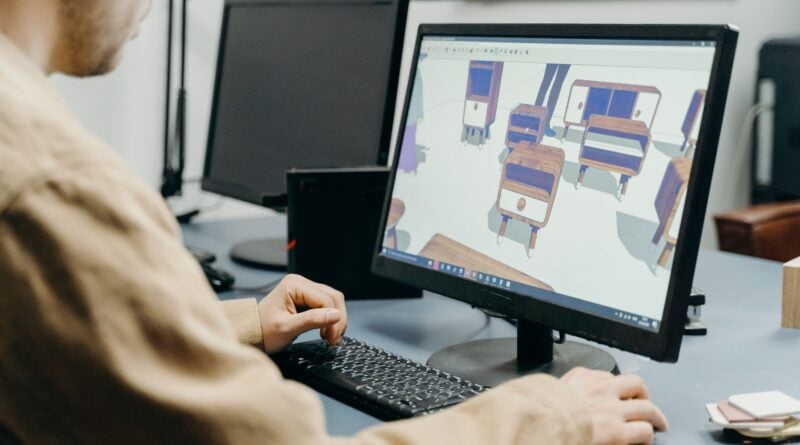
The process starts with a CAD model, a precise three-dimensional description of the product’s geometry. Software then applies materials, surface finishes, and lighting, and calculates how light would bounce, reflect, and cast shadows. The result is an image that can show brushed metal, clear plastic, soft rubber, or a glossy coating with accuracy. Because the model is digital, the same product can be shown in any color, any angle, and any setting without rebuilding anything.
Rendering versus photography
A photograph needs a physical object, a built sample, a lit set, and a reshoot for every change. A rendering needs none of that. Want the handle in red instead of black, or the logo moved two centimeters, or the product shown on a kitchen counter and again on a retail peg hook? Each is a settings change, not a new photo shoot. For an invention that is still being refined, that flexibility matters more than it would for a finished product already in production.
Why pitches rely on them
Companies that license outside inventions review many submissions. A clear, accurate image of the product communicates faster than pages of description. The reviewer can see the form, the scale, and the finish in seconds. This is why renderings have become standard in invention pitch materials, often paired with a one-page sell sheet that presents the product visually.
The shift is real. More inventions are now evaluated and licensed off renderings and CAD models rather than physical samples. A virtual prototype package, typically renderings plus a CAD model and sometimes product animation, gives a manufacturer enough to assess an invention without the inventor building anything by hand. Enhance Innovations, a product development firm in Champlin, Minnesota that has served inventors since 2010, produces these packages digitally, which keeps the cost and time of pitching far below building a physical prototype first.
The connection to patent drawings
Renderings and formal patent drawings come from the same source, the CAD model, but serve different audiences. A rendering persuades a buyer. A patent drawing satisfies the USPTO. Design patent figures, governed by the USPTO’s design examination rules described in the Manual of Patent Examining Procedure, must follow strict line and view conventions, while a rendering is free to look like a finished photo. One model can feed both, which is why design and engineering done together reduce duplicated work.
Where renderings help and where they do not
A rendering shows appearance, scale, and finish. It cannot prove that a mechanism works. For an invention whose value is in how it functions, a rendering communicates the look while engineering analysis or a functional unit addresses the mechanics. Honest pitch materials make that distinction rather than implying a render is proof of function.
Renderings also do not replace the early legal steps. Before spending on visuals, an inventor should confirm the invention is new. The USPTO’s patent basics explain why a search comes first, and the Small Business Administration offers general guidance on sequencing early product spending. A beautiful render of an idea that turns out to be unpatentable is wasted money.
The bottom line
Photorealistic rendering moved product visualization from the camera to the computer. For inventors, that means an invention can be shown the way buyers expect to see it long before it is built. The image is only as accurate as the CAD model behind it, so the discipline that matters is precise modeling, not retouching. Used in the right order, after the invention is defined and cleared, a rendering turns a described invention into something a company can actually look at and judge.
This article is educational and is not legal or financial advice.