Tire Pressure and Tread Checks Before Winter Driving: Mistakes to Avoid
Tires are the only part of a car that touches the road, so their condition matters a great deal once snow and ice arrive. Many drivers wait until the first storm to think about tires, and that is often too late. This article explains how to check pressure and tread, and it highlights the mistakes that leave people with poor grip during the season’s first slippery week.
Tires lose a surprising amount of performance when the weather turns cold. Rubber stiffens as temperatures fall, and the air inside each tire contracts. A tire that looked fine on a warm autumn afternoon can read low on a freezing morning. Driving on tires that are soft or worn can make the car feel vague when you steer and slower to respond when you brake.
Why cold weather changes tire pressure
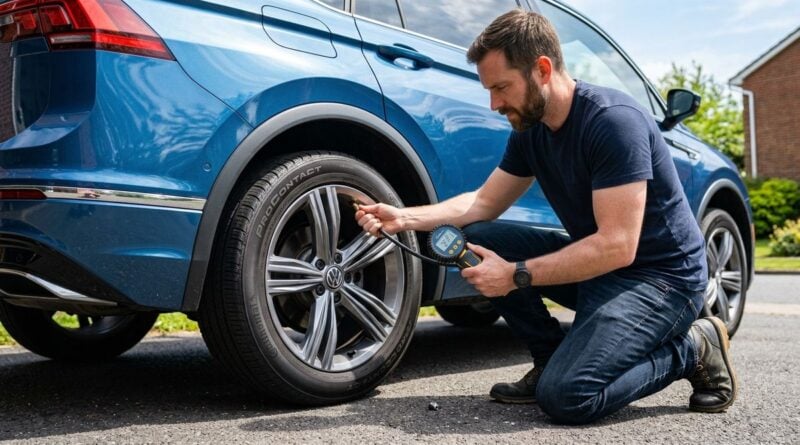
Air contracts as temperatures fall, so tire pressure drops over a cold stretch. Underinflated tires wear unevenly, run hotter, and respond more slowly when you steer or brake. Checking pressure when the tires are cold, before you have driven far, gives the most reliable reading. The correct pressure is printed on a label inside the driver’s door or in the owner manual, and it is different from the maximum pressure stamped on the tire sidewall.
The sidewall number shows the most a tire can safely hold, not the figure to inflate to. Many drivers make this mistake and end up with overinflated tires that skid more easily on slick roads. Check the label, set the pressure to that figure, and recheck after a week of cold weather, because the reading can change quickly when temperatures swing.
Checking tread depth the simple way
Tread gives both winter tires and all-season tires the bite they need on wet and icy surfaces. A simple coin test can show whether the tread has worn too thin. Place a coin with its head facing down in one of the grooves. If you can see the top of the head, the tread is likely too shallow for dependable grip in snow. Readers may also want to visit advanceautocars.com.
Uneven wear deserves attention even when the depth looks acceptable. If one edge of the tread is noticeably more worn than the other, the cause may be alignment or suspension. Fixing the underlying problem protects the new tires you buy later and keeps the car tracking straight on slippery roads.
A winter tire checklist
- Check the pressure on all four tires, and include the spare, when the tires are cold.
- Look for uneven wear across the tread, which can point to alignment or suspension issues.
- Examine each tire for cuts, bulges, nails, or cracks in the sidewall.
- Confirm that tires on the same axle match in type, and avoid mixing very different tread patterns.
- Note the date code on the sidewall, because older rubber can harden even when the tread looks good.
Mistakes to avoid when choosing winter tires
One common error is buying a set of winter tires with the wrong width or load rating for the vehicle. Another is assuming that all-wheel drive makes the car stop better. It helps you get moving from a standstill, but it does little for braking or turning on ice. A qualified tire fitter can recommend sizes and ratings that match the owner manual and your local driving conditions.
Some drivers also wait too long to change seasons. Driving on summer tires in freezing conditions is risky because the rubber stiffens and loses grip. Plan the change for when the weather turns consistently cold, rather than waiting for the first heavy snowfall, when shops may be busy and appointments harder to get.
Driving habits that make tires last
Good tires perform best with smooth inputs. Brake gently, accelerate steadily, and leave extra room between your car and the vehicle ahead. Sudden movements overwhelm grip, whether the tires are new or worn. Many winter collisions happen because drivers keep the same speed they would use on dry pavement, so slowing down is often the most effective safety step available. You can also visit World Fastest Motorcycle for more reading.
Keep a small tire log in your glovebox with the dates of pressure checks and rotations. Writing down what you noticed, such as a slight pull to one side or a new vibration, gives a technician useful information and helps you spot gradual changes before they become expensive problems.
When to see a professional
Visible damage, uneven wear that does not improve with pressure changes, or a vibration at highway speed should be checked by a qualified technician. A shop can measure the alignment, inspect the suspension, and confirm whether a tire can be repaired safely. For a related read on this site, see Practical Healthy Snacks for Long Indoor Holiday Days.
Winter tires and proper pressure work together. A little attention in late autumn gives you better control on the first icy morning. Make these checks a regular habit at the same time each year, and you will spend less time worrying about the road when the weather turns difficult.