A Simple Monthly Tyre Check for Nervous New Drivers
Tyres are the only part of a car that touches the road, yet many new drivers rarely think about them until a warning light appears or a flat tyre leaves them stranded. If you are learning to drive later in life, or you have recently taken over the wheel after years as a passenger, a short monthly tyre check can give you real confidence. This article explains what to look for, how to check the pressure without special skills, and how to spot problems early enough to act calmly.
Why tyres deserve regular attention
Tyres carry the full weight of your vehicle and transfer every turn, stop and acceleration to the road. When they are under-inflated, worn or damaged, the car can handle less predictably, particularly in wet weather or during an emergency stop. Many drivers only notice a problem when the steering pulls to one side or the car takes longer to stop than usual. A monthly check helps you catch these changes before they become serious.
Checking tyres also saves money over time. Under-inflated tyres wear faster and can use a little more fuel. Regular checks give you a clear picture of how your tyres age, so you can plan replacements rather than being surprised by them. None of this requires advanced knowledge, only a few minutes and a reliable gauge.
Finding the correct pressure
Every vehicle has a recommended tyre pressure, and it is usually printed on a sticker inside the driver’s door frame or in the fuel filler flap. The handbook will also list the figures, sometimes separately for the front and rear and for a full load. Use the figure recommended for your car, not the maximum printed on the tyre sidewall, because the sidewall figure is the safe limit for the tyre rather than the best setting for your vehicle.
Use this order each time you check:
1. Check the tyres when they are cold.
2. Read the pressure from the door sticker.
3. Inspect the tread and the sidewall.
4. Record the readings in your notebook.
Check your tyres when they are cold, which means the car has been parked for a few hours or has covered only a short distance. Driving warms the air inside the tyres and makes the reading higher than it really is. If you must check them after a journey, allow time for them to cool before adjusting anything.
Checking tread and surface condition
Tread depth matters because it helps the tyre grip wet roads. Many countries have a legal minimum tread depth, and a simple coin test can give you a rough idea of how much tread remains. Place the coin into a groove and look at how much of the outer edge is visible. If the outer edge is hidden, the tread is probably still acceptable, but if the edge is clearly visible, you should arrange a professional inspection soon.
Look also for cuts, bulges, cracks in the sidewall and any objects lodged in the rubber. A bulge can indicate internal damage and should be examined by a qualified technician as soon as possible. Uneven wear, such as heavier wear on one edge, can point to alignment or suspension issues that are worth discussing with a garage. Readers may also want to visit AndroMods.com.
Using a gauge safely
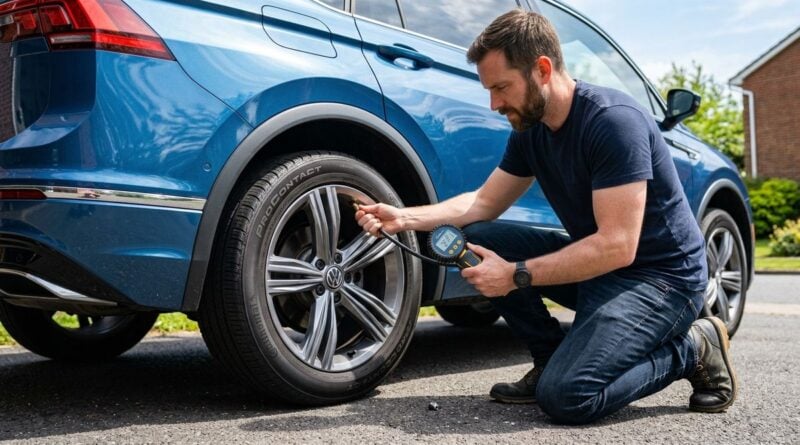
A simple pen-style or dial gauge is inexpensive and easy to use. Remove the valve cap, press the gauge firmly onto the valve and read the number. Replace the cap afterwards, because it keeps dirt and moisture out of the valve. If you add air, use a garage air line or a service station machine, and add small amounts at a time, checking the reading after each burst.
Do not overinflate the tyres in an attempt to make them firmer, since this can reduce grip and make the ride harsh. If you notice that one tyre loses air much faster than the others, it may have a puncture or a damaged valve. Mark it in your notebook and have it inspected rather than waiting for it to go flat on the motorway. You can also visit 10printers for more reading.
Building the check into your routine
Choose a fixed day each month, perhaps the first Saturday or the day you fill the car with fuel. Keep a small notebook in the glovebox with the date, the pressures you recorded and any observations. Over time, the notebook shows patterns that a single check would never reveal, such as a slow leak or a tyre that wears unusually quickly.
For a related read on this site, see Checking Car Seat Fitting Before a Grandchild Rides. You can also ask an experienced friend to walk around the car with you for a first demonstration, which is often more reassuring than reading instructions alone.
If you are unsure about anything you find, ask a qualified mechanic to look at the tyres. Most garages are happy to explain what they see, and a short conversation can teach you a great deal. Keeping tyres in good condition is one of the simplest ways to make every journey safer and more predictable.